 Tiếng Việt
 English

Almost everything you use every day, from your shirt and your coffee beans to your phone, has very likely crossed an ocean aboard a cargo ship. Because they are so closely tied to the history of human trade, cargo ship models have a special appeal for maritime enthusiasts, logistics professionals and collectors alike. This article takes you through the evolution of the cargo ship, from merchant sailing vessels to today's giant container ships, and offers practical advice on choosing a wooden cargo ship model you will truly enjoy.
Cargo ships – the foundation of world trade
For thousands of years, water has been the most efficient way to move large quantities of goods. A single boat could carry a load that would have needed dozens of carts on land, and it could travel distances that the roads of the time could not reach. That is why markets, cities and trading centers grew up wherever there were seaports and great rivers.
The history of cargo ships is also the history of shipbuilding: people constantly looked for ways to make ships carry more, sail faster, stay safer and need smaller crews. Each step forward left behind a distinctive type of vessel, which is exactly why the world of cargo ship models is so rich and varied.
From merchant sail to container ships: the key milestones
Antiquity: boats on the Nile
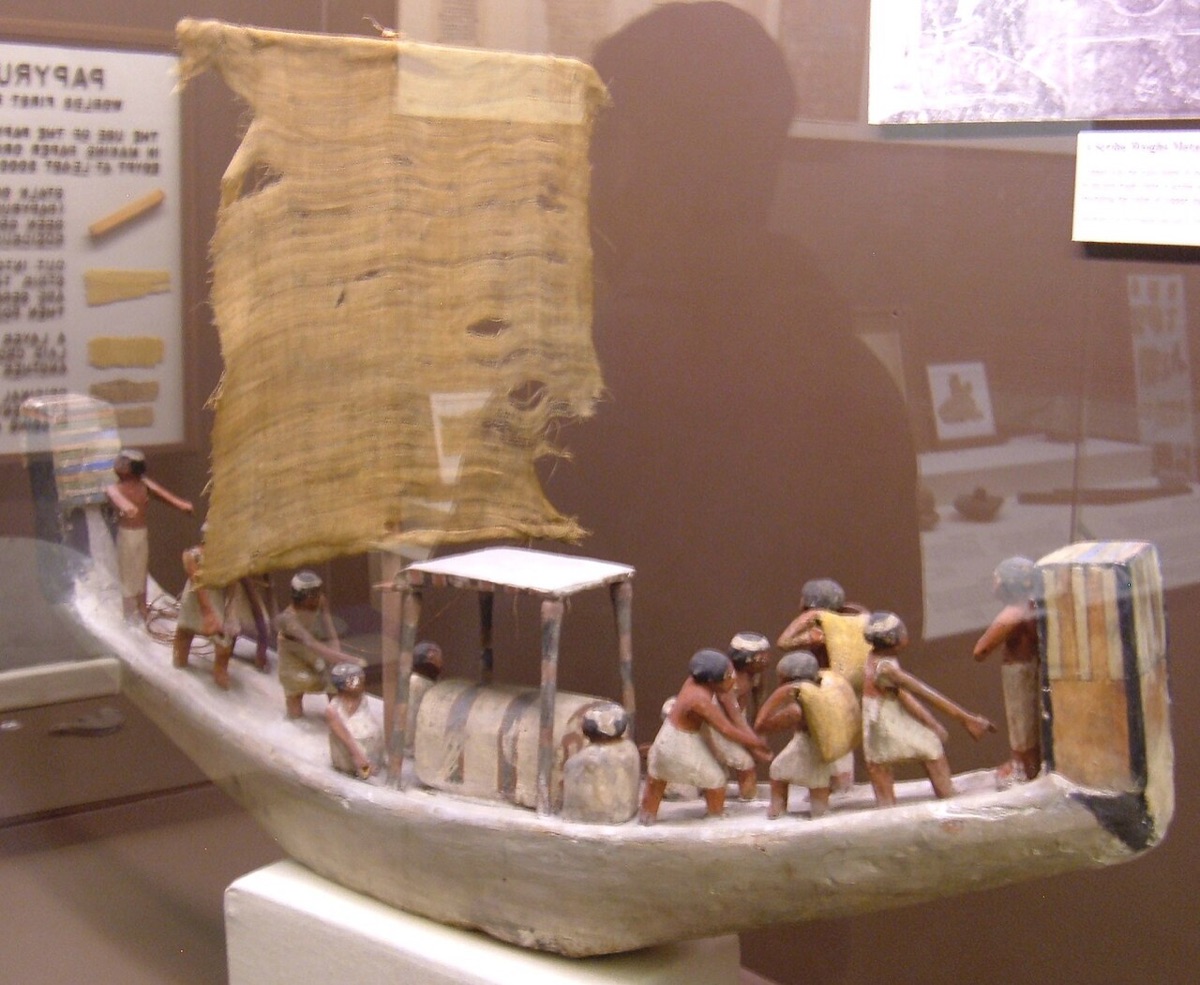
The ancient Egyptians were among the first peoples to use boats to carry grain, building stone and goods along the Nile. Remarkably, they were also early model makers: during the Middle Kingdom, more than four thousand years ago, wooden boat models were placed in tombs in the belief that they would serve the dead in the afterlife. Many of these models are still on display in museums today, showing just how old the tradition of ship model making really is.
The Middle Ages and the Age of Discovery
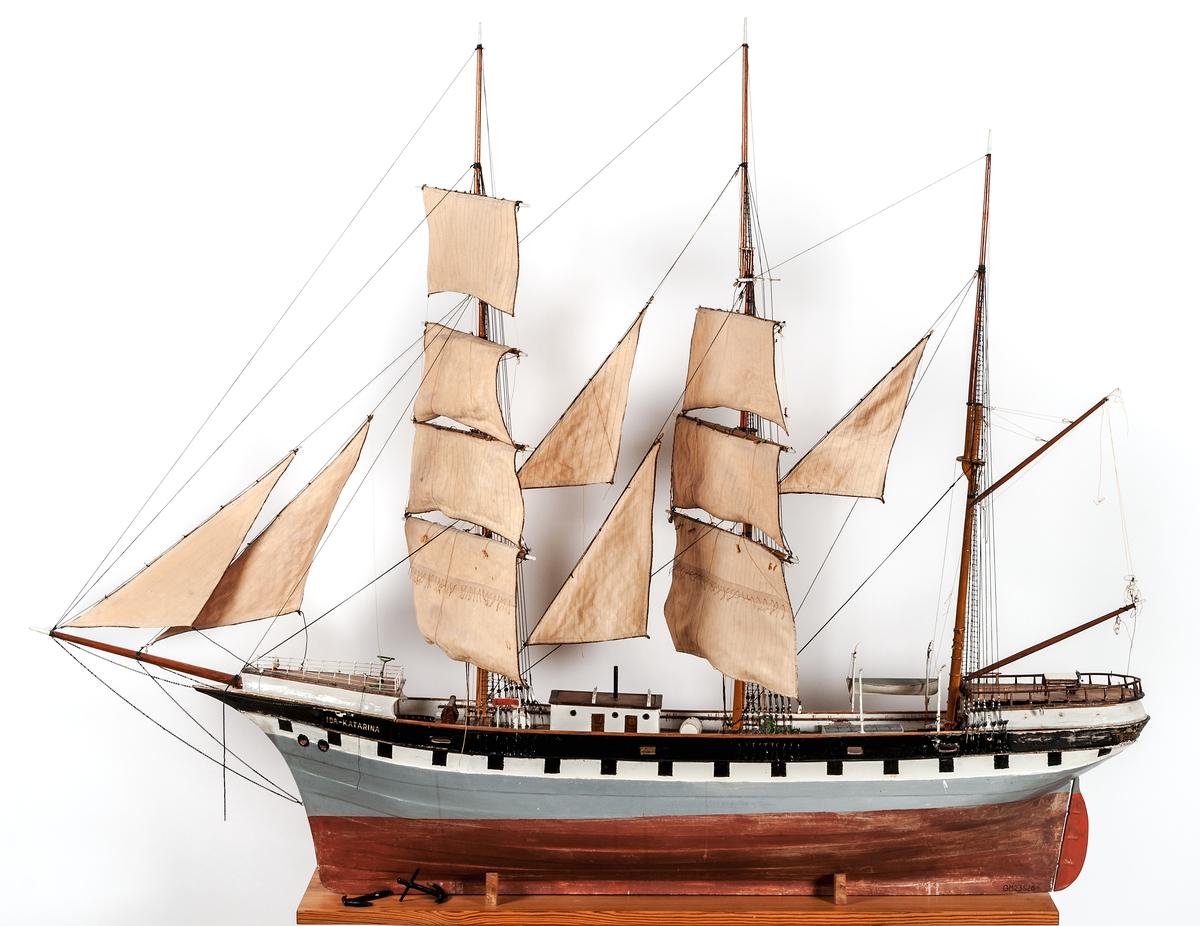
In medieval northern Europe, the cog – a broad, deep-hulled ship with a single square sail – became the "truck" of the Hanseatic League, carrying timber, salted fish, furs and grain between trading cities. In the 16th and 17th centuries, the Dutch developed the fluyt: a round-bellied ship with a large hold that needed only a small crew, which cut transport costs dramatically. In the same era, great merchant fleets crossed the oceans to link Europe with Asia, opening the famous spice, tea and porcelain routes. If you love the sailing ships of this period, read our article on wooden sailing ship models and the legendary ships behind them.
The 19th century: the golden age of the clipper
In the mid-19th century the clipper appeared, with a narrow hull, a sharp bow and an enormous spread of sail, designed to race along the tea, wool and high-value cargo routes. Cutty Sark, launched in 1869, is the most famous surviving clipper and is preserved today in Greenwich, London. At the same time, steamships gradually took over – at first still carrying sails for support, then replacing wind power entirely thanks to their reliability and ability to keep to a schedule.
The 20th century: the container revolution
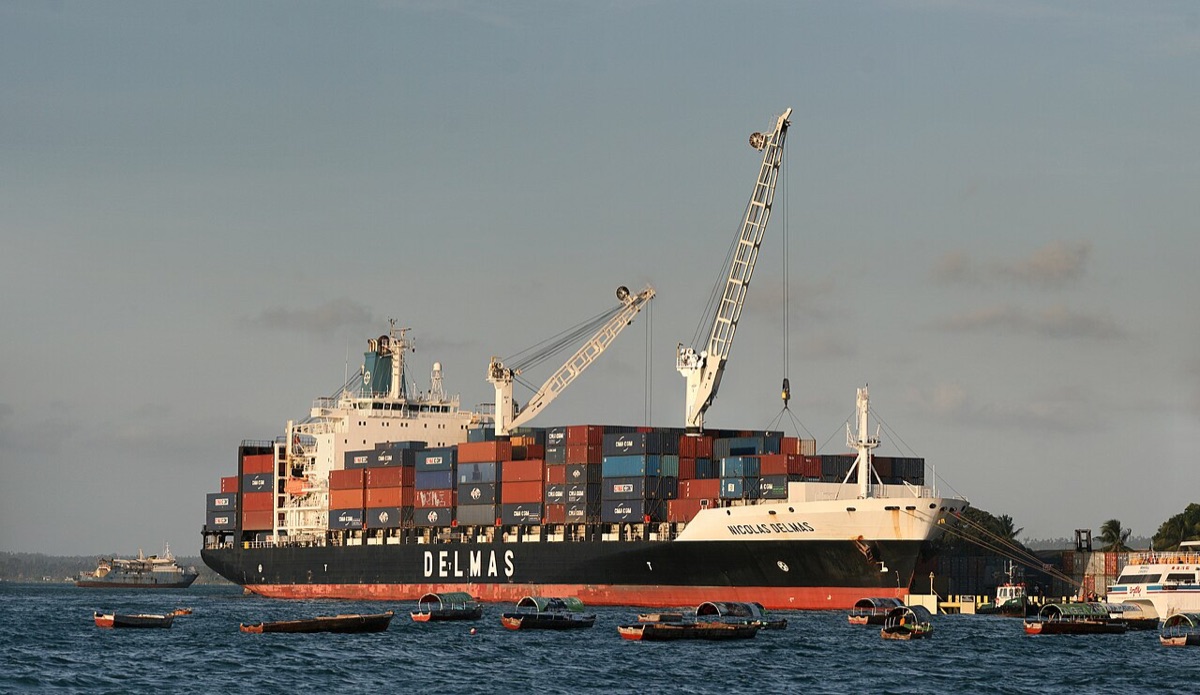
In 1956, entrepreneur Malcolm McLean sent the Ideal X from Newark to Houston (United States) carrying standardized boxes. The idea of packing goods into steel boxes of identical size and loading them straight from trucks onto ships transformed the shipping industry. Today, container ship capacity is measured in TEU – twenty-foot equivalent units, based on a standard 20-foot container – and the largest ships can carry tens of thousands of TEU.
Why do collectors love cargo ship models?
They are not as glamorous as cruise ships or as heroic as warships, yet cargo ships have a beauty of their own: the beauty of endurance and function. There are at least four reasons why this kind of model ship is so sought after.
- Rich technical detail: cranes, hatch covers, anchor winches, the wheelhouse, funnels, lifeboats… every part has a clear purpose, which is fascinating for anyone curious about how ships are built.
- A link to a career: people working in import–export, logistics, ports and seafaring often choose a cargo ship model as a keepsake or office decoration that reminds them of their work.
- A symbol of prosperity: a ship loaded with goods stands for abundance, good business and goods flowing freely – a symbol many business owners love.
- History in miniature: each type of ship belongs to a particular era of trade, turning a collection into a small museum of maritime history.
The tradition of ship model making is also closely tied to seafarers themselves. In many coastal regions of Europe, sailors and pilots carved models of the ships they had served on and handed them down to their children as family heirlooms.
Cargo ship models at Vietnam Wooden Ships
The cargo ship model collection at Vietnam Wooden Ships includes handmade wooden models, each with its own character. Here are the key details for each one.
ANTEO – an imposing working ship
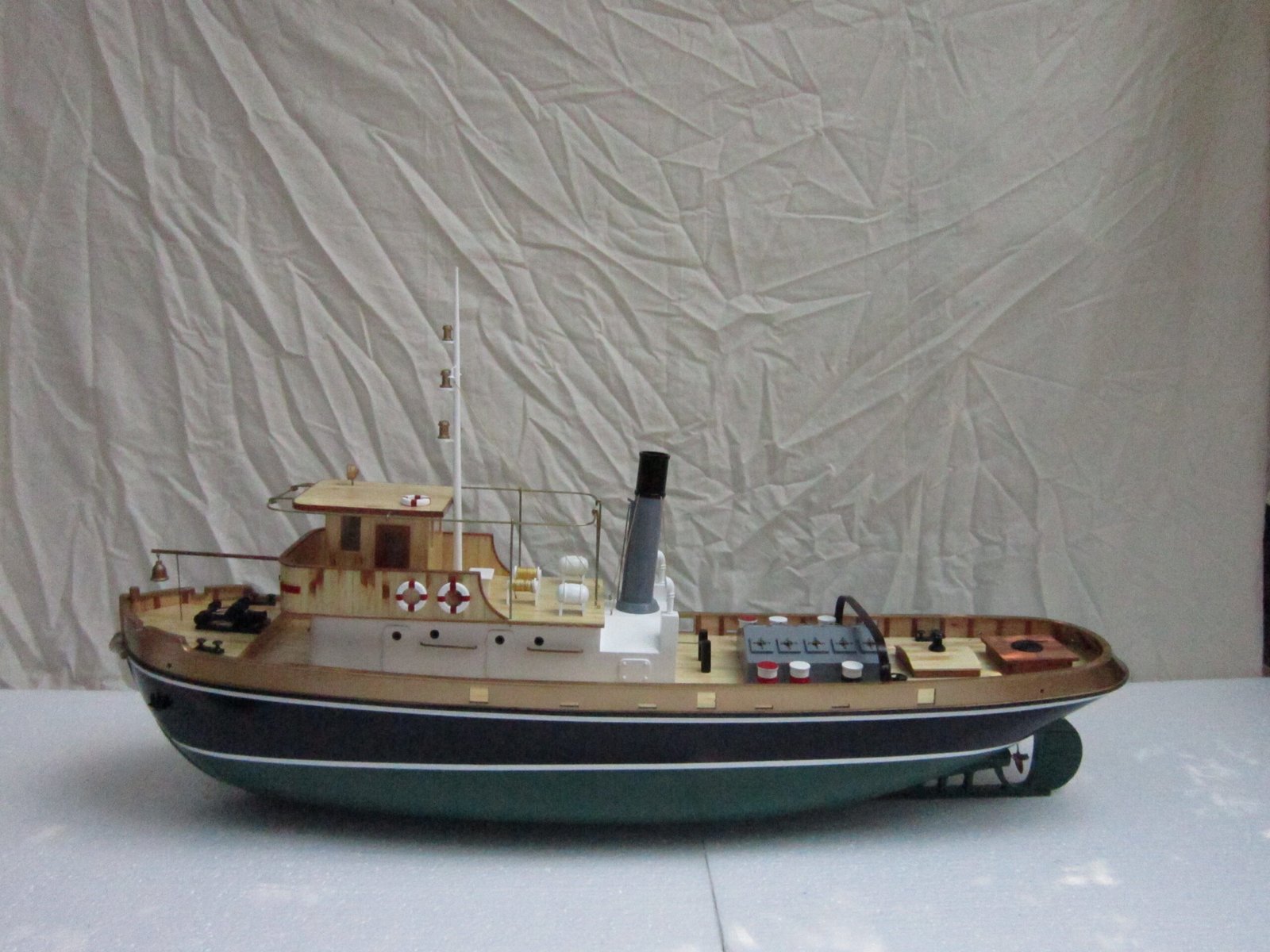
At 80 cm long and 30 cm tall, the ANTEO ship model has a long, low profile that captures the spirit of a working vessel. This size is ideal for a low cabinet in an office or a long shelf in a living room, where viewers can take in the full length of the hull.
AMERICAN SCONUT – available in two sizes
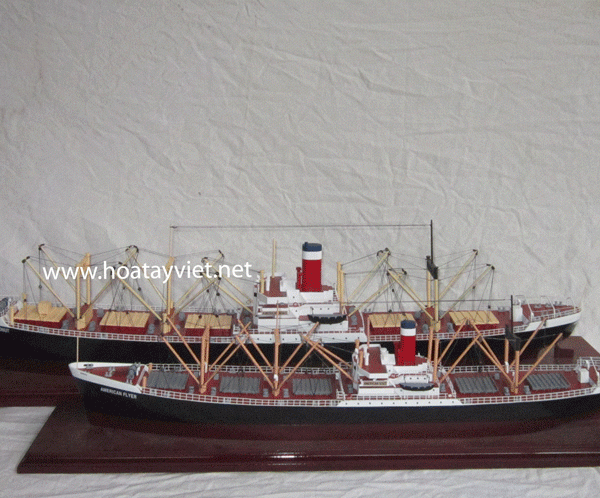
The AMERICAN SCONUT model stands out for its long, slender hull and comes in two sizes: 80 × 10 × 22 cm and 60 × 8 × 18 cm. That makes it a flexible choice: the larger version suits a living room, while the smaller one fits neatly on a desk or bookshelf and makes an easy gift.
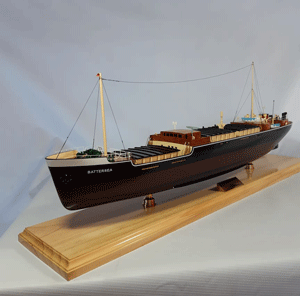
BATTERSES – compact and easy to place
At 75 cm long but only 22 cm tall, the BATTERSES model has a low, compact profile that fits into many glass cabinets and shelves with limited height between tiers.
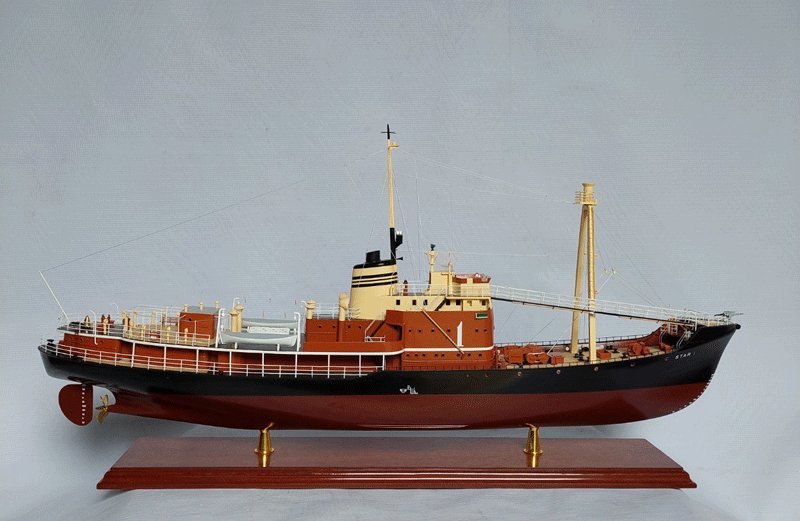
STAR 1 – a vertical statement
Unlike the low-profile models, the STAR 1 model stands 75 cm tall on an 80 cm length. These proportions create a strong vertical shape, ideal for a room corner, a lobby or an empty wall that needs a focal point.
Quick comparison of our cargo ship models
| Model | Code | Size (cm) | Features | Best for |
|---|---|---|---|---|
| ANTEO | CH 001 | 80 × 15 × 30 | Long, imposing hull | Office, living room |
| AMERICAN SCONUT | CH 016 | 80 × 10 × 22 / 60 × 8 × 18 | Slender, two sizes | Desk, gift |
| BATTERSES | CH0023 | 75 × 15 × 22 | Low and compact | Glass cabinet, multi-tier shelf |
| STAR 1 | TB 009 | 80 × 16 × 75 | Tall and eye-catching | Room corner, lobby |
These models are priced on request – contact us for a quote. You can browse the whole collection on our products page, or explore the cruise ship and yacht models if you would like to combine several types of ships in the same space.
How to choose the right cargo ship model
Start with where it will go
Measure the length, depth and height clearance of the spot where you plan to display the model. An easy rule of thumb: the model should take up about two-thirds of the surface's length, and the surface should be at least 8–10 cm deeper than the model is wide. For a tall model such as the STAR 1, don't forget to check the height of your glass cabinet or wall shelf. Detailed advice on proportions and placement is in our guide on how to choose a cruise ship or yacht model for your space.
Choose for the person who will own it
- Import–export and logistics companies: a long-hulled model such as the ANTEO, placed behind a desk or in the lobby, reflects exactly what the business does.
- Seafarers and maritime professionals: pick a model close to the type of ship they have served on; the sentimental value always matters more than the size.
- New collectors: start with a medium-sized model such as the 60 cm version of the AMERICAN SCONUT, then expand the collection era by era.
- Gifts for business partners: choose a low-profile model with a sturdy base that is easy to place, so the recipient can display it straight away on a cabinet or desk.
Check the quality of the finish
A fine cargo ship model needs balanced proportions, tight wood joints, an even paint finish and clearly crafted small details such as cranes, railings and anchor winches. Study the product photos from different angles and don't hesitate to ask for real photos. The full checklist is in our article 10 tips for buying a wooden model ship.
Keeping your cargo ship model in top condition
Wood is a living material that reacts to humidity and temperature. To keep your model's shape and colors for years, display it in a dry, well-ventilated place away from direct sunlight and air-conditioning drafts; dust it with a soft brush instead of a damp cloth; and always lift it by the base or the hull, never by the masts, cranes or railings. See our user guide and the detailed article on how to care for a wooden model ship.
Frequently asked questions
Is a cargo ship model a good corporate gift?
Yes. A cargo ship symbolizes thriving trade and goods flowing freely, so it makes a great gift for a grand opening, a company anniversary or a thank-you to partners – especially for import–export and logistics businesses.
What size of cargo ship model is best for a desk?
For a desk, choose a model about 60 cm long with a narrow hull, such as the 60 × 8 × 18 cm version of the AMERICAN SCONUT, so it doesn't take up your working space.
When did container ships first appear?
The first commercial container voyage is usually considered to be Malcolm McLean's Ideal X, which sailed from Newark to Houston (United States) in 1956. Since then, the standard container has become the dominant way to ship goods around the world.
Does a wooden ship model need a glass cabinet?
It is not essential, but a glass cabinet or acrylic case helps keep out dust and prevents knocks, and is highly recommended in busy offices or homes with small children.
How do I order a cargo ship model?
Contact us by phone at +84 908 062 685 or through our contact page for advice and a quote, including payment and shipping arrangements. The ordering steps are explained on our buying guide page.
Get advice on cargo ship models
Looking for a cargo ship model for your office, a gift for a business partner or a new addition to your collection? Call +84 908 062 685 or send a request through the Vietnam Wooden Ships contact page for model advice, a quote and payment and shipping arrangements. Our workshop is located at 199 Hamlet 1B, Phuoc Thai, Long Thanh, Dong Nai, Vietnam. The ordering process is explained on our buying guide page.